Why the loudest components are in the room
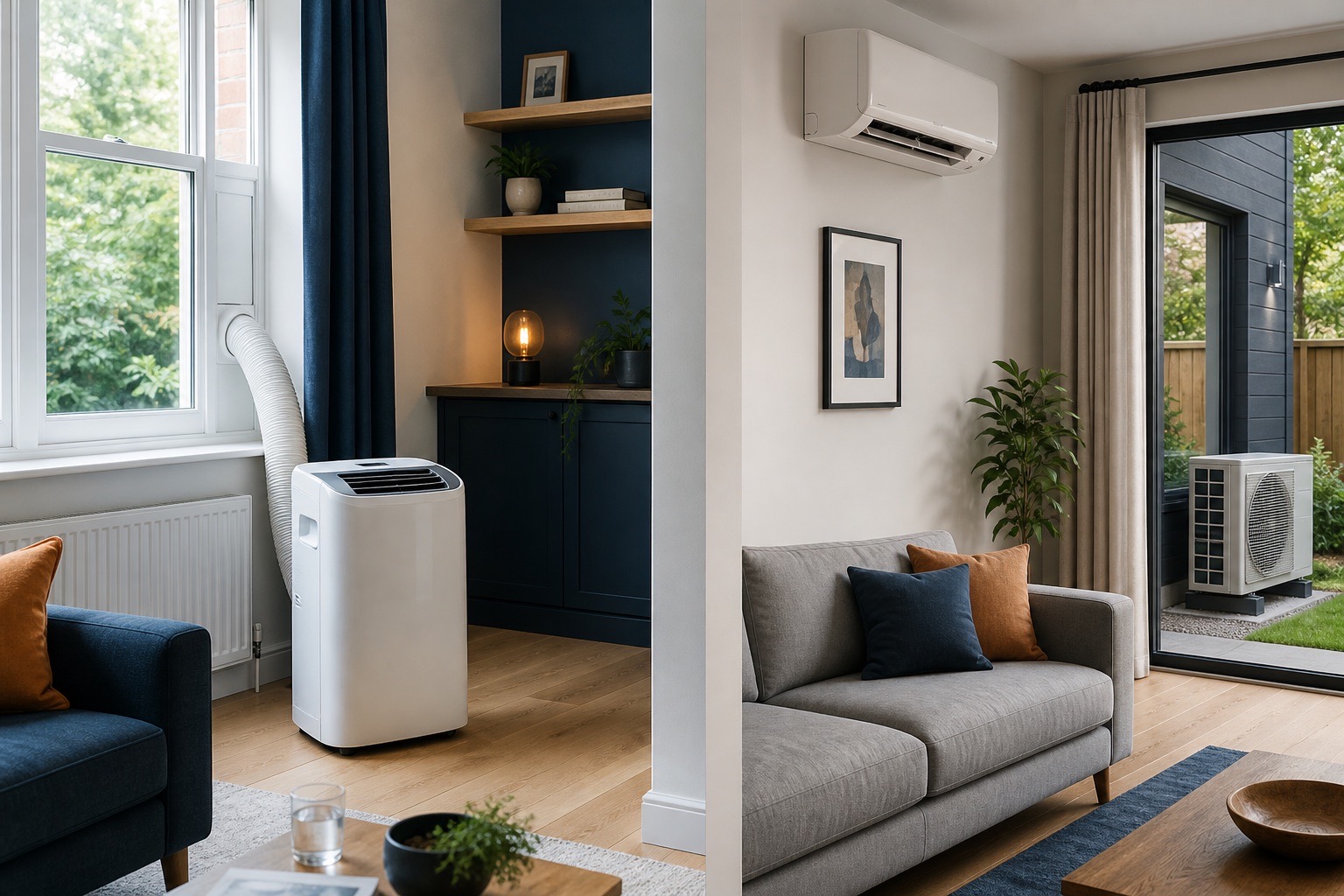
A portable air conditioner places its compressor, evaporator fan and condenser fan inside the occupied room. The compressor changes refrigerant pressure, the fans move substantial air and the cabinet can transmit vibration into the floor. A split system normally puts the compressor and outdoor heat exchanger outside, leaving an indoor fan and coil in the room. That layout helps explain why an installed split can publish a lower indoor figure, but outdoor-unit noise and professional installation remain part of that decision.
Portable sound is not a single unchanging tone. Starting and stopping the compressor, a thermostat change, condensate pump, louvre motor, air turbulence and a hose or window panel can each be noticeable. Two appliances with the same headline dB value may sound different because frequency content, cycling and cabinet resonance differ. CoolCompare uses published data and documented context; it does not claim that a model has been heard in a bedroom unless a genuine, disclosed test has taken place.
Decibels are logarithmic and need a defined quantity
The National Physical Laboratory explains that a decibel is a logarithmic presentation, not a simple linear unit. HSE notes that a 3 dB change may be just noticeable even though it represents a doubling of sound energy. That does not mean the appliance will sound twice as loud to every person. Human response depends on frequency, duration, background level, room acoustics and whether the sound is steady, tonal or intermittent.
Look for dB(A), which applies a frequency weighting intended to reflect human hearing, and identify whether the figure is sound pressure or sound power. Sound power describes the source; sound pressure describes what is measured at a position under stated conditions. They are not interchangeable. The UK energy-label generator includes indoor sound-power fields for relevant air-conditioner types. A retailer dropping the words 'power', 'pressure', distance or operating mode can make an apparently precise comparison unreliable.
Compare only like-for-like published figures
Record the exact model, acoustic quantity, operating mode, fan speed, test standard and measurement distance where available. Compare minimum with minimum and maximum with maximum. A low figure measured in fan-only or sleep mode cannot fairly beat another model's maximum-cooling figure. If a specification lists one number, present it as one published value rather than inventing a range. If the manual and retailer disagree, retain the conflict until a stronger exact-model source resolves it.
Do not rank models from dB alone when their cooling outputs differ. A lower-capacity product on its quietest setting may move less heat than the room needs and run for longer. Compare sound alongside verified BTU/h, input power, room guidance and the setting that can meet the load. Third-party certification such as Quiet Mark can add evidence for products it has actually assessed, but the badge applies only to the certified model and methodology; it cannot be transferred to a similar-looking range mate.
Bedroom suitability is personal and room-specific
At night, a low background level makes compressor transitions and fan changes more obvious. Some sleepers tolerate a steady broadband fan sound but wake when the compressor cycles; others dislike airflow or display light. A published sleep mode may reduce fan speed, alter the set point or dim controls, yet it does not remove the compressor and is not a guarantee of undisturbed sleep. Check the exact manual for what the mode changes instead of relying on its name.
Think about timing as well as volume. Pre-cooling the room before bed and then selecting a lower fan setting may help in some conditions, but a poorly insulated or highly glazed room can warm again quickly. Switching the unit off completely may not be appropriate during severe heat, particularly for vulnerable occupants. Follow current UKHSA hot-weather guidance and personal medical advice. A CoolCompare bedroom label is decision support based on disclosed attributes, not clinical advice or a measured sleep outcome.
Installation details can prevent avoidable rattles
Place the unit upright on a firm, level surface with the manufacturer clearances. A flexible floor, touching furniture or a loose drain cap can amplify vibration. Fit the approved window kit securely and stop panels, blinds and the exhaust hose from tapping the frame. Keep the hose within its permitted length and bend limits: crushing or extending it can restrict airflow and should not be used as a noise fix. Never wrap the cabinet or block grilles with acoustic material.
Clean filters to the documented schedule and inspect accessible parts only as the instructions allow. Reduced airflow can change the sound and impair performance. New grinding, electrical buzzing, burning smells, leaking or repeated fault codes need the manufacturer or a competent repair route, not continued overnight use. Before moving a compressor product, follow its handling and standing-time instructions. Product recalls are model-specific, so check the OPSS database by exact model rather than assuming a whole brand is affected.
Use a home trial carefully if the returns policy permits
A showroom or phone video cannot reproduce a quiet bedroom accurately. If a retailer's written returns terms allow an appropriate trial, listen from the sleeping position with doors and windows in their expected configuration. Try the cooling setting required for the room, not only fan mode, and note compressor transitions over enough time to observe cycling. Avoid publishing a phone sound-meter number as laboratory evidence: handset microphones, automatic processing, distance and background noise can make readings unsuitable for product ranking.
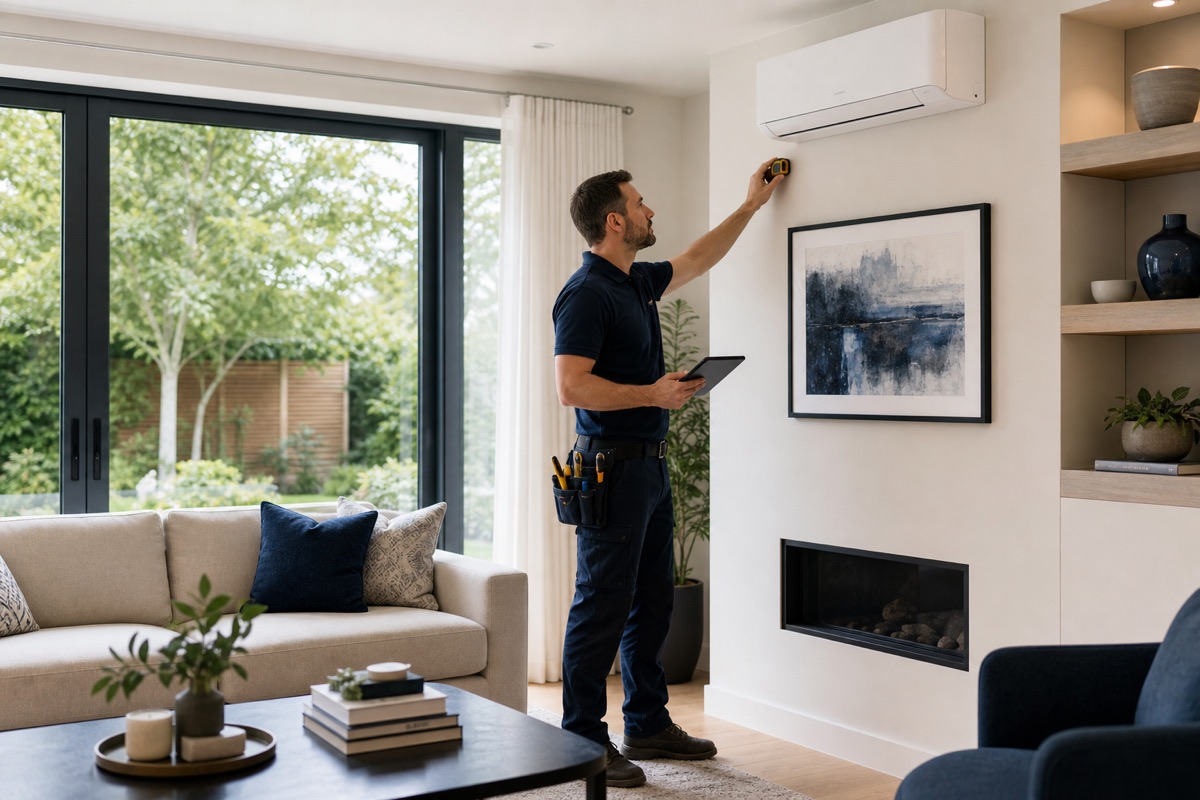
Keep the decision reversible where noise sensitivity is high. Confirm delivery access, product weight, storage, window fit and return conditions before opening packaging. A dedicated circuit may be required by the instructions; extension leads and overloaded adaptors are not solutions to inconvenient placement. If a genuinely quiet sleeping environment is the priority and permanent work is acceptable, compare a correctly designed split system as well as portable models, while including outdoor noise, permission and installation cost.
Build a transparent quiet-product shortlist
Start with products that have exact-model manufacturer or label evidence for sound, then filter for the capacity the room needs. Record whether the source gives minimum, maximum or one value and whether it is sound power or pressure. Add compressor behaviour only where a manual or credible independent source documents it. Then compare sleep controls, timer, fan speeds, display dimming, weight, hose setup and returns policy. Unknown data should remain unknown rather than receiving an optimistic quiet score.
The honest answer is that portable air conditioners are audible because the refrigeration machinery is indoors, but 'too noisy' depends on the model, setting, room and sleeper. A few decibels without matching test context cannot settle the decision. Use CoolCompare's noise comparison to translate verified fields, then read the source documents and operating instructions. No published score on this site represents a laboratory sound test, customer-review average or promise that a particular person will sleep through operation.
Decide whether a noise is an ownership compromise or a fault
Establish the normal sound sequence while the appliance is new and operating correctly. With the exact manual beside you, note what happens in fan-only, cooling and any drainage-related mode: the fan starting, the compressor engaging, louvres moving, the thermostat pausing cooling and the cabinet settling after it stops. Do this only in the intended upright position, on a firm level floor, with clearances, filter, drain caps, hose and window panel fitted as instructed. A repeatable change linked to a named operating state may be an ordinary characteristic even if it remains unacceptable for sleep; a loose panel tapping in the window is an installation problem rather than evidence that the compressor itself is loud. Record the mode, fan speed, set point, room position and time into the cycle. That baseline makes a returns decision more meaningful than a brief fan-only demonstration and gives a repairer something more precise than “it makes a noise”.
Treat a new, worsening or irregular sound differently, especially when it arrives with reduced airflow, leakage, unusual heat, an electrical smell, repeated stopping or a fault code. Grinding, scraping, arcing or a heavy impact should not be normalised by turning up the fan or running the unit overnight to see whether it clears. Switch off and isolate the product in accordance with its instructions where safety is in doubt, then use the retailer, manufacturer or competent service route; do not open the cabinet, defeat an interlock or touch the refrigerant circuit. Preserve a short recording if this can be made safely, along with the exact model and serial number, purchase evidence, mode and the point in the cycle. Check model-specific safety notices rather than assuming online reports about a similar cabinet apply. The resulting decision is clearer: tolerate or return a documented normal sound profile under the written terms, correct a safe setup rattle, or stop and escalate a suspected defect instead of treating every unwanted noise as the same comparison metric.